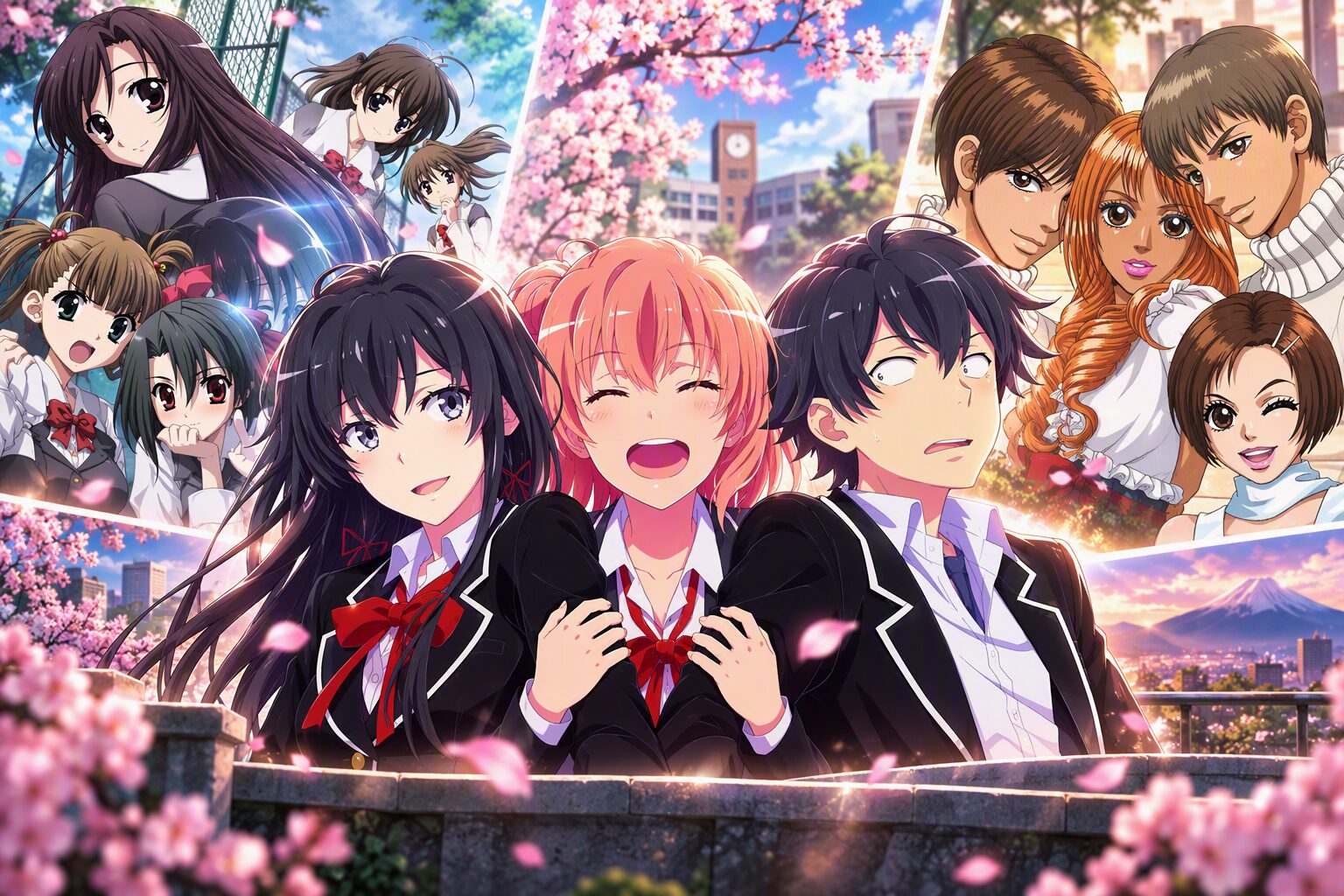

Love triangles: you love them, you hate them, or maybe they’re your ultimate guilty pleasure. Whatever side you’re on, you can’t deny the electric tension and passionate debates they ignite. Are you Team Zero or Team Kaname (Vampire Knight)? Team Edward or Team Jacob (Twilight)? Team Yuki or Team Kyo (Fruits Basket)? Still rooting for Team Nobu or Team Takumi (Nana)? Or maybe you’re in the thick of the Team Hina versus Team Rui (Domestic Girlfriend) wars.
These triangles aren’t just a source of drama—they’re a cornerstone of anime and manga storytelling. With every glance, confession, and heartbreak, love triangles force characters and the viewers to confront the messy, unpredictable nature of love. Whether it’s the fiery tsundere transfer student, the bold self-proclaimed lover, the loyal childhood friend, the flirty playboy, or the mysterious supernatural rival, there’s always someone to root for—and someone to root against.
But what exactly makes the love triangle trope so enduring, so dramatic, and sometimes, so divisive? Why do we keep coming back for more, even when we know someone’s heart or our own hearts will be broken?
Let’s break down the anatomy of the anime love triangle, explore the classic roles and variations, and dive into some of the most memorable examples in anime and manga history.
Table of Contents
What is A Love Triangle?
At its core, a love triangle is a romantic entanglement involving three characters, where affections are split, unrequited, or in direct competition. It’s a narrative device that brings out the best—and worst—in its characters, testing loyalties, friendships, and personal growth.
Anime and Manga love triangles often feature classic archetypes:
- The tsundere (often the mysterious transfer student)
- The self-proclaimed lover (bold and outspoken)
- The loyal childhood friend (steady, sometimes overlooked)
- The supernatural rival (adding fantasy or intrigue)
Each role stirs up unique dynamics, making the outcome unpredictable and the emotional stakes sky-high.
Why Do Love Triangles Matter?
Emotional Tension and Drama
Love triangles heighten the emotional rollercoaster of any romance. Every choice, secret, or misunderstanding can alter the story’s direction, keeping viewers on edge and invested in the characters’ happiness (or heartbreak).
Character Growth
Facing romantic competition forces protagonists to confront their own feelings, insecurities, and desires. Whether they end up with their first crush or realize new feelings for an unexpected rival, characters (and their fans) are taken on a journey of self-discovery.
Fan Engagement
Love triangles fuel passionate discussions, fan art, and “shipping wars” across the internet. Picking a side isn’t just a pastime—it’s a way for fans to connect, speculate, and express their hopes for their favorite characters.
Iconic Moments
From dramatic confessions to shocking betrayals, love triangles have given us some of anime’s most talked-about scenes. Whether the resolution brings closure or controversy, these stories linger long after the credits roll.
Love Triangles in Anime: Notable Series
Let’s explore some of the most memorable anime and manga that put the love triangle trope front and center, each offering a unique spin on romantic rivalry and emotional stakes.
Peach Girl

Author: Miwa Ueda
Genre: Romance, Drama, Love Polygon
Demographic: Shoujo
Manga: 18 volumes (1997–2003)
Anime: 25 episodes (2005)
Summary:
Momo Adachi finds herself caught between her sweet but complicated first love, Kazuya “Toji” Tojigamori, and the unpredictable playboy, Kairi Okayasu—all while battling vicious rumors from her frenemy and the series’ antagonist, Sae Kashiwagi. Peach Girl is a whirlwind of misunderstandings, jealousy, and emotional rollercoasters, making every episode and chapter a masterclass in love triangle drama.
Winner: Kairi Okayasu. While Momo’s heart is pulled in different directions when she dates both boys, she ultimately finds happiness and true love with her second love Kairi Okayasu, making him the winner of this iconic shoujo love triangle.
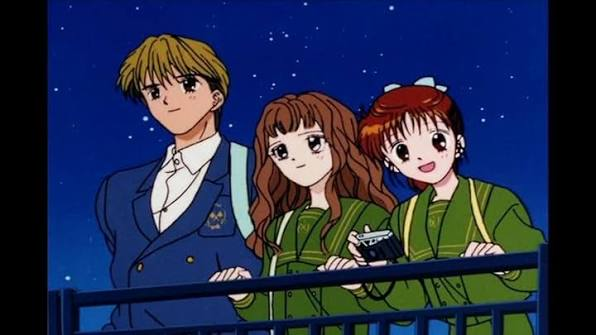
Marmalade Boy
Author: Wataru Yoshizumi
Genre: Romance, Drama, Slice of Life
Demographic: Shoujo
Manga: 8 volumes (1992–1995)
Anime: 76 episodes (1994–1995)
Summary:
When Miki Koishikawa’s parents swap partners with another couple, she’s suddenly living with the charming and enigmatic Yuu Matsuura. Their complicated new family life is only the beginning, as Miki’s feelings for Yuu are challenged by new rivals, and the tangled relationships around them.
Winner: Yuu Matsuura. Despite the many twists and love rivals, Miki and Yuu end up together, cementing their status as one of shoujo’s most iconic couples.
School Days

Author: Based on the visual novel by 0verflow, story by Homare Sakazuki
Genre: Drama, Psychological, Romance, Harem
Demographic: Seinen
Anime: 12 episodes (2007)
Summary:
Makoto Itou’s crush on Kotonoha Katsura sets off a chain reaction of lies, betrayal, and escalating jealousy, with his classmate Sekai Saionji thrown into the mix. Unlike other harem and romance series, School Days pulls no punches—its love triangle spirals into a shocking conclusion that’s become infamous in anime history.
Winner: No true winner. The series ends in tragedy for all three main characters, with none finding happiness—an infamous subversion of the love triangle trope.
A Town Where You Live (Kimi no Iru Machi)
Author: Kouji Seo
Genre: Romance, Drama, Slice of Life
Demographic: Shonen
Manga: 27 volumes (2008–2014)
Anime: 12 episodes (2013)
Summary:
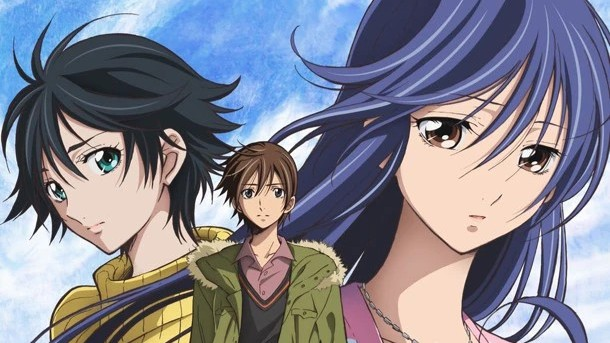
Haruto Kirishima’s quiet life is upended when Eba Yuzuki moves in from Tokyo. As feelings develop, Haruto is torn between new love, his crush Nanami Kanzaki, and the many changes that come with growing up. Long-distance relationships, misunderstandings, and heartbreak abound in this emotional drama.
Winner:
Yuzuki Eba. After much heartache and separation, Haruto and Yuzuki end up together, with their relationship surviving many trials.
My Teen Romantic Comedy SNAFU (Oregairu)
Author: Wataru Watari
Genre: Comedy, Drama, Romance, Slice of Life
Demographic: Light Novel (Anime Adaptation)
Anime: 3 seasons (2013–2020)
Summary:
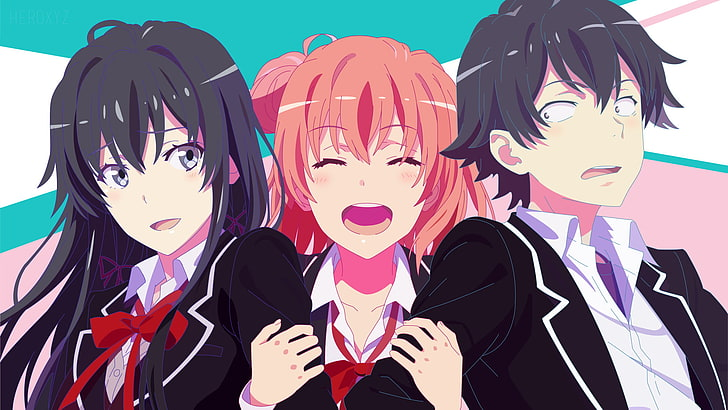
Cynical loner Hachiman Hikigaya finds himself working alongside the cool, sharp-tongued Yukino Yukinoshita and the bubbly Yui Yuigahama in their school’s Service Club. The series skillfully weaves romantic tension and social commentary, as all three struggle to understand their own feelings and what it means to truly connect with others.
Winner: Yukino Yukinoshita. In the end, Hachiman openly chooses Yukino, resolving the triangle and giving fans a satisfying (if bittersweet) conclusion.
Why We Can't Stop Picking Sides
Whether you’re rooting for the tsundere, the childhood friend, or the wildcard rival, love triangles keep audiences invested in every flirtation and heartbreak. They’re a testament to the messy, unpredictable nature of love—and the power of storytelling to make us care deeply about fictional relationships.
Frequently Asked Questions (FAQs)
1. What is a love triangle in anime?
A love triangle is a romantic storyline involving three characters whose affections are split, unrequited, or in direct competition with one another. It’s a narrative device used to test characters’ loyalties, force emotional growth, and create dramatic tension between the audience’s favorite pairings.
2. Why are love triangles so popular in anime and manga?
Love triangles heighten emotional stakes, drive character growth, and fuel fan engagement through “shipping wars” and passionate debate. They give viewers someone to root for — and someone to root against — which keeps audiences invested episode after episode.
3. What are the classic archetypes in an anime love triangle?
The most common roles are the tsundere (often a mysterious transfer student), the bold self-proclaimed lover, the loyal childhood friend, and — in fantasy or supernatural series — the mysterious supernatural rival. Each archetype creates a different dynamic and pulls the story in a different emotional direction.
4. Do all anime love triangles end happily?
No. Some, like Marmalade Boy and A Town Where You Live, resolve with a clear “winner” and a happy ending. Others, like School Days, subvert the trope entirely — ending in tragedy for all three leads rather than giving fans a satisfying resolution.
5. What’s the difference between a love triangle and a harem anime?
A love triangle centers on three characters and typically resolves with one clear pairing. A harem involves one protagonist and multiple love interests (often more than two), and doesn’t always resolve the romantic tension at all — some harem series intentionally leave the “winner” ambiguous.
6. What is considered the most controversial anime love triangle?
School Days is widely considered one of the most divisive, since its love triangle ends in tragedy for all three characters instead of a traditional resolution — a stark subversion of the trope that still sparks debate among fans today.
7. Which anime love triangle has the most divided fanbase?
My Teen Romantic Comedy SNAFU (Oregairu) is frequently cited as one of the most fan-splitting, since the “correct” pairing was debated for years across three seasons before Hachiman ultimately chose Yukino Yukinoshita.
8. Are love triangles more common in shoujo or shonen anime?
Love triangles appear across both demographics, but they’re a particularly defining feature of shoujo romance (Peach Girl, Marmalade Boy), while shonen and seinen series tend to use them to add psychological or dramatic weight rather than as the central plot, as seen in School Days and A Town Where You Live.






Leave a Comment