
Fan clubs in anime and manga are a popular narrative trope, mirroring the excitement and devotion of real-life fandom. These groups rally around a favorite character—be it an idol, an athlete, or even a classmate—bringing out some of the most memorable moments in a series. Whether providing comic relief, stirring up drama, or creating unexpected plot twists, fan clubs can be both delightful and, at times, a little over-the-top or even troublesome. Their passion and antics reflect the highs and lows of fandom itself.
Fan clubs can bring people together, spark friendly rivalries, and create a sense of belonging, but they can also lead to wild antics or obsessive behavior that shakes up the story. From hilarious group shenanigans to intense loyalty and even the occasional mischief, these clubs often leave a lasting impression on both characters and viewers alike. The presence of a fan club can completely change the social dynamics of a school or community within the story, turning ordinary days into unforgettable adventures—or chaos.
If you’re curious about series where fan clubs truly shine (for better or worse), you’re in luck: in this list, I’ll introduce you to five anime and manga where fan clubs play a standout role, offering a mix of humor, drama, and a unique look at the passionate world of fandom.
Honorable Mentions:
1. Arimi’s Fan Club (Marmalade Boy)
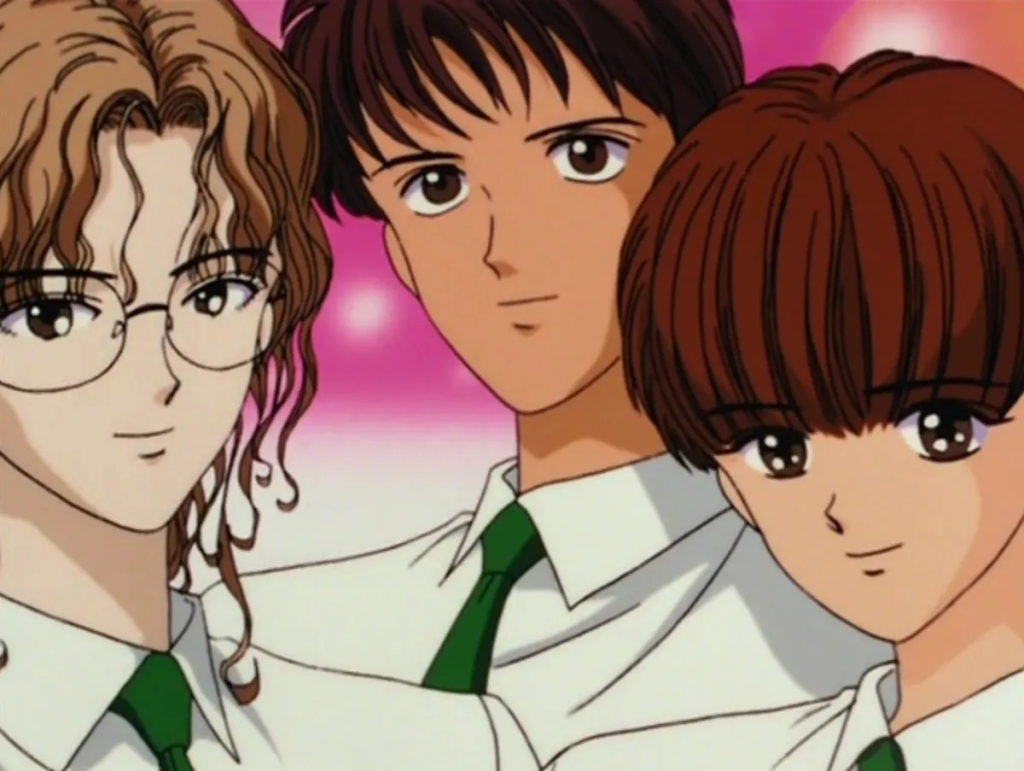
At Sakaki Academy, Arimi Suzuki is surrounded by a fiercely loyal fan club made up of three of the school’s most popular and attractive boys: Murai, Imai, and Tomishige.
Instead of seeking their own girlfriends, these third-year students devote themselves to Arimi, following her everywhere and serving as her unofficial bodyguards. Their loyalty is so strong that they’ll go so far as to physically intervene when someone they find unworthy like Tsutomu Rokutanda, Ginta Suou’s cousin, who tries to get close to her.
The trio’s presence at Arimi’s side only adds to her reputation as a school idol, as many girls at Sakaki Academy wish to date them, but they remain focused on Arimi.
Despite their intimidating reputation, it’s eventually revealed that Murai, Imai, and Tomishige are simply close friends of Arimi’s, each with a girlfriend from another school.
Their collective role in the story highlights the classic “fan club” dynamic, demonstrating how popularity and loyalty can shape school relationships—and how, in Arimi’s case, it’s all part of her unique status at Sakaki Academy.
2. Aki, Nori, and Sango (Peach Girl)
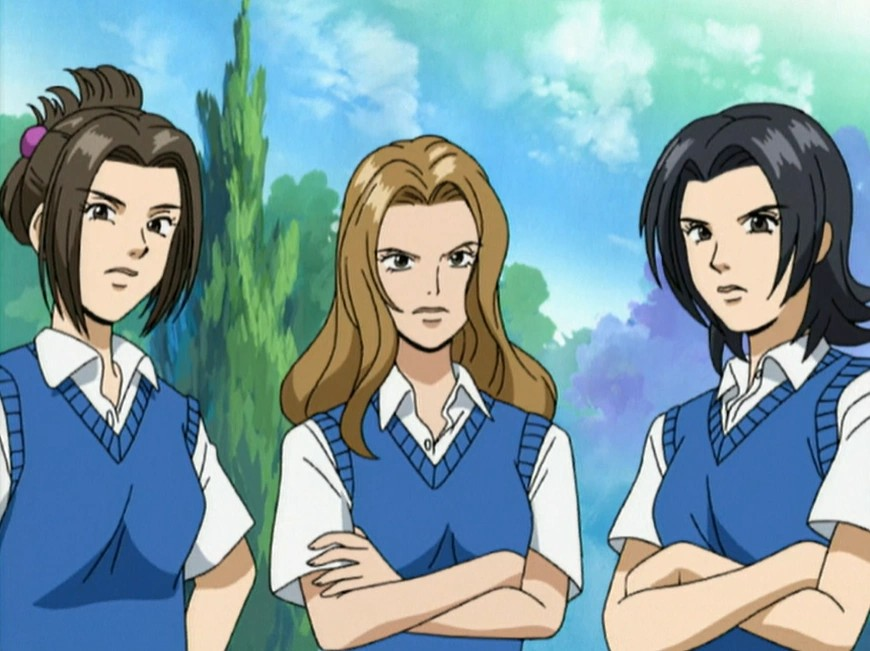
Aki, Nori, and Sango are a trio of classmates in Peach Girl known for their unwavering devotion to Kairi Okayasu as his dedicated fangirls.
With their distinct appearances, they are frequently seen together, often watching over Kairi and becoming visibly annoyed or jealous whenever Momo Adachi grows close to him.
While they don’t play a major role in the story, their presence highlights the kind of fan group dynamic found in many school-based anime and manga—devoted, observant, and always ready to defend their favorite from perceived rivals.
3. Lum’s Stormtroopers (Urusei Yatsura)
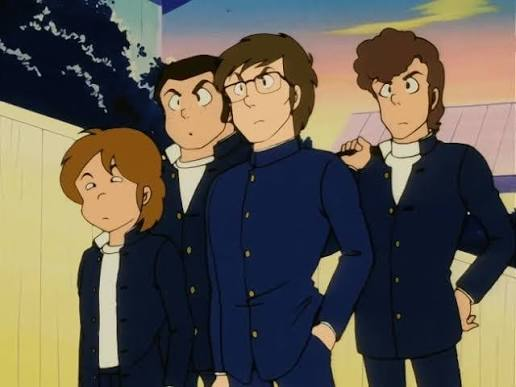
Lum’s Stormtroopers—or Lum’s Guards—are four devoted schoolboys from Tomobiki High School: Megane (Satoshi), Perm (Kōsuke Shirai), Kakugari (Hiroyuki), and Chibi (Akira). United by their love for the electrifying alien Lum, these classmates devote themselves to protecting her—especially from Ataru Moroboshi, who constantly causes trouble and tests Lum’s patience.
The Stormtroopers form the core of Lum’s fan club, always shadowing her, hatching elaborate plans to get closer to her, and leaping to her defense whenever they feel Ataru or anyone else has wronged her.
Their story began with Lum’s dramatic arrival at Tomobiki High. While they slowly faded into the background in the manga, the 1981 anime brought them to life as regular sources of comic relief. Known for their passionate group antics, military cosplay, and ongoing rivalries—especially with the popular Shūtarō Mendō—they often squabble among themselves but always reunite for Lum’s sake.
Their over-the-top devotion, slapstick humor, and otaku culture references have made Lum’s Stormtroopers a beloved staple of the series and one of anime’s most memorable fan clubs.
5) The Lilies (Boys Over Flowers)
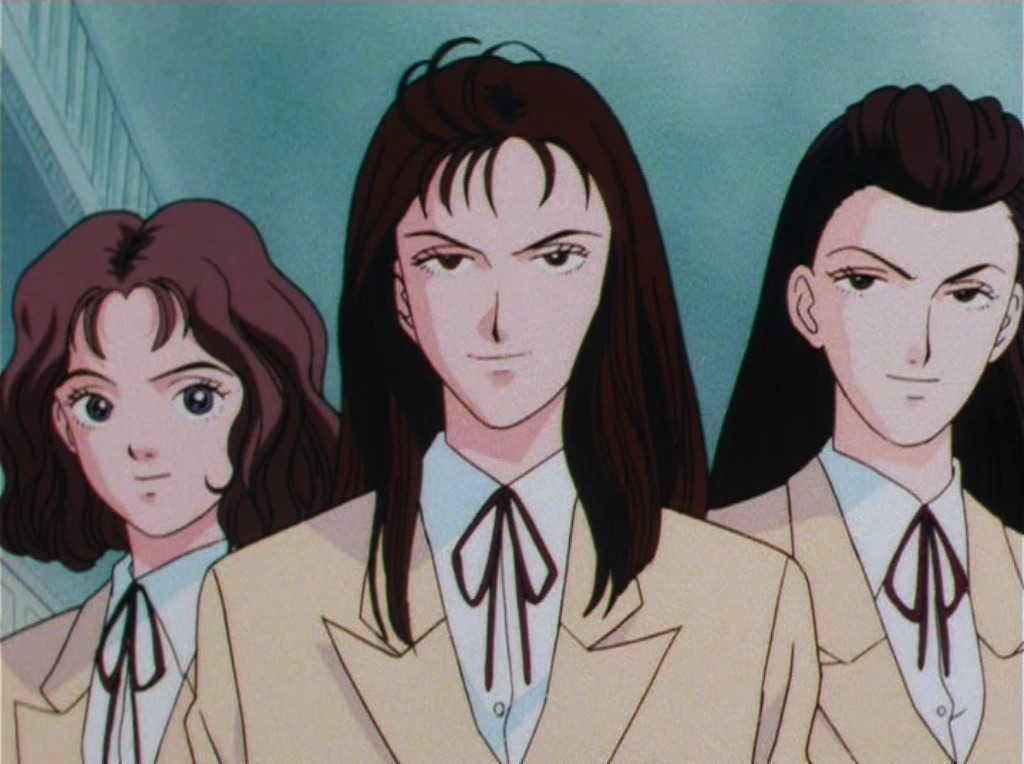
The Lilies, which are Yuriko Asai, Erika Ayuhara, and Minako Yamano—are a trio of best friends at Eitoku Academy whose main ambition is to get close to the school’s legendary F4: Tsukasa Domyoji, Rui Hanazawa, Sojiro Nishikado, and Akira Mimasaka. The F4 are the most powerful, popular, and attractive boys at Eitoku, and for The Lilies, winning the favor of any one of them would mean ultimate social prestige, wealth, and influence.
From the start, The Lilies are infamous for their snobbishness and cruelty. They relentlessly bully Tsukushi Makino, a strong-willed girl from a modest background, simply because she becomes close to the F4 and threatens their social
ambitions. Their tactics include spreading rumors, engineering public humiliations, and weaponizing their influence to try to drive Tsukushi out of school life. They epitomize the dark side of school fan clubs—where admiration is tangled up with jealousy, entitlement, and classism.
As the story progresses, The Lilies’ direct attacks on Tsukushi fade—not because they change or feel remorse, but because their bullying is no longer effective and Tsukushi refuses to be broken. They never receive a redemption arc or meaningful character growth.
By the anime’s conclusion, The Lilies simply shift their malicious attention to a new student, showing that their behavior is a recurring pattern rather than a personal vendetta against Tsukushi.
None of The Lilies end up with any of the F4, despite their scheming and devotion to status. Their arc serves as a pointed critique of shallow ambition, toxic fan culture, and the emptiness of social climbing. The Lilies remain a memorable example of how the fan club trope in anime can be used to explore the darker realities of admiration and rivalry.
4) The Prince Yuki Fan Club (Fruits Basket)
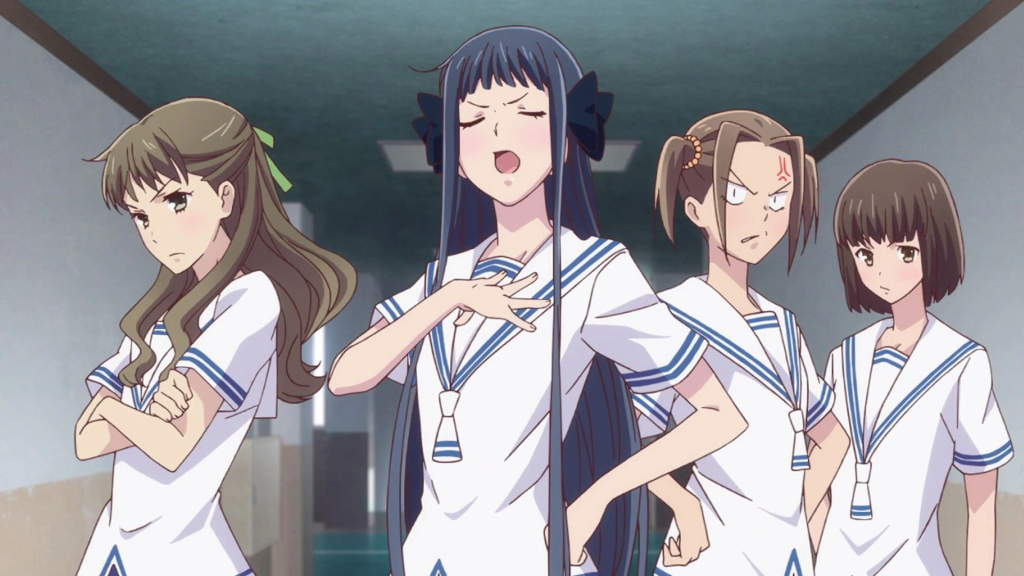
The Prince Yuki Fan Club is a large, fiercely devoted group of girls at Tohru Honda’s school in Fruits Baskets, they all infatuated with the mysterious and princely Yuki Sohma.
Under the leadership of Motoko Minagawa, the club operates with a strict (and sometimes absurd) set of rules: no member can approach Yuki alone, and everyone must address him by elaborate titles based on their school year. The club essentially claims Yuki as their own—no other girl is allowed to get close to him.
Early in the story, the fan club takes an instant dislike to Tohru when she is seen coming to school with Yuki, suspecting her of trying to “steal” him. They confront and bully Tohru, referring to her as a witch and Saki Hanajima as a demon who
protects her. Their intimidation is short-lived, however, as Saki and Arisa Uotani quickly chase them off. The club’s presence is so notorious that Tohru fears even telling her friends about living with Yuki, knowing the fan club is the source of much of her anxiety.
The fan club is highly organized, with a memorable cheer in the 2001 anime—“L-O-V-E, We love Yuki, Yuki!”—and a dramatic group pose to match their over-the-top devotion. Well-known members include President Motoko Minagawa, Vice President Minami Kinoshita, Rika Aida, Mai Iwata, and more.
Despite their efforts, none of the girls ever win Yuki’s heart, as he ultimately falls for Machi Kuragi—someone who sees past his idol status to the loneliness he feels, in part because of the club’s obsessive admiration. Eventually, the club backs off as all the Sohmas become friends with Tohru, and they realize angering Yuki would only push him further away.
The Prince Yuki Fan Club is a classic example of the “school idol fan group” trope: organized, passionate, sometimes intimidating, and ultimately a reflection of how admiration from afar can lead to isolation rather than real connection.
3) The Baka Trio (Maid Sama!)
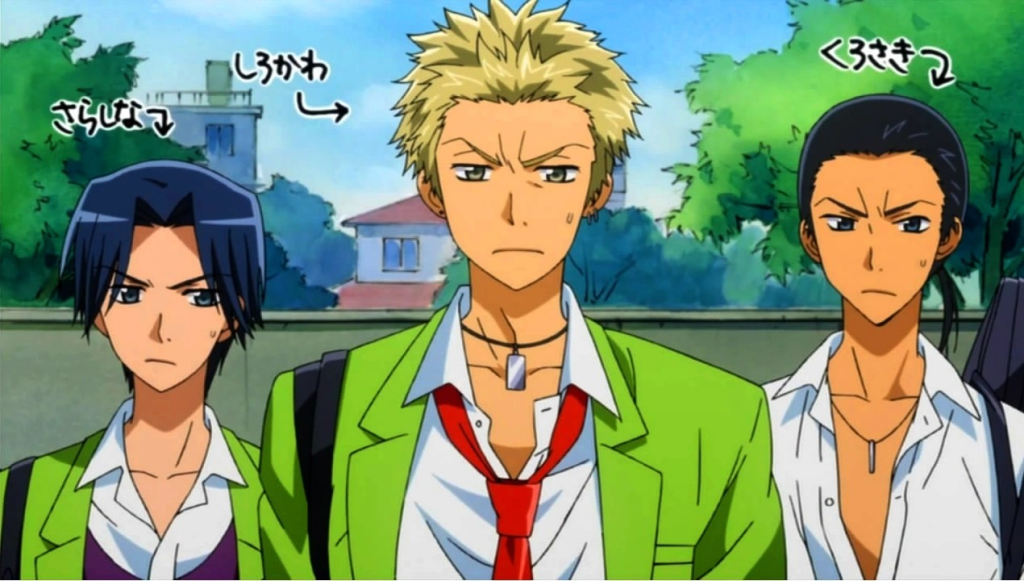
The Baka Trio, also known as the Moron Trio or Idiot Trio consits of Shiroyan (Naoya Shirakawa), Kurotatsu (Ryuunosuke Kurosaki), and Ikkun (Ikuto Sarashina), three former delinquents at Seika High School in Maid Sama! by Hiro Fujiwara.
At first, these three are the bane of Misaki Ayuzawa’s existence, openly rebelling against her strict reforms as the first female student council president. However, everything changes when they accidentally discover Misaki’s secret part-time job at Maid Latte. Rather than expose her, the trio are instantly converted into her biggest, most loyal fanboys.
Instead of the typical mean-girl clique, the Baka Trio subvert the trope as devoted, harmless, and fiercely protective supporters. They become Maid Latte regulars, cheering Misaki on with genuine admiration and lighthearted antics. Shiroyan, the unofficial leader, is a reformed delinquent with a soft spot for Misaki’s determination. Ikkun, the closet otaku, channels his admiration into manga illustrations of the maids, while Kurotatsu provides comic relief as the group’s notorious flirt.
Their transformation from adversaries to fan club is a recurring source of warmth and comedy, and they remain a constant presence in Misaki’s life, right up to her wedding years later. The Baka Trio are not only a memorable fan group, but also my personal favorite characters in the series as they prove that even the rowdiest troublemakers can become the most devoted supporters.
2) Kirio Fan Club (Kirio Fan Club)
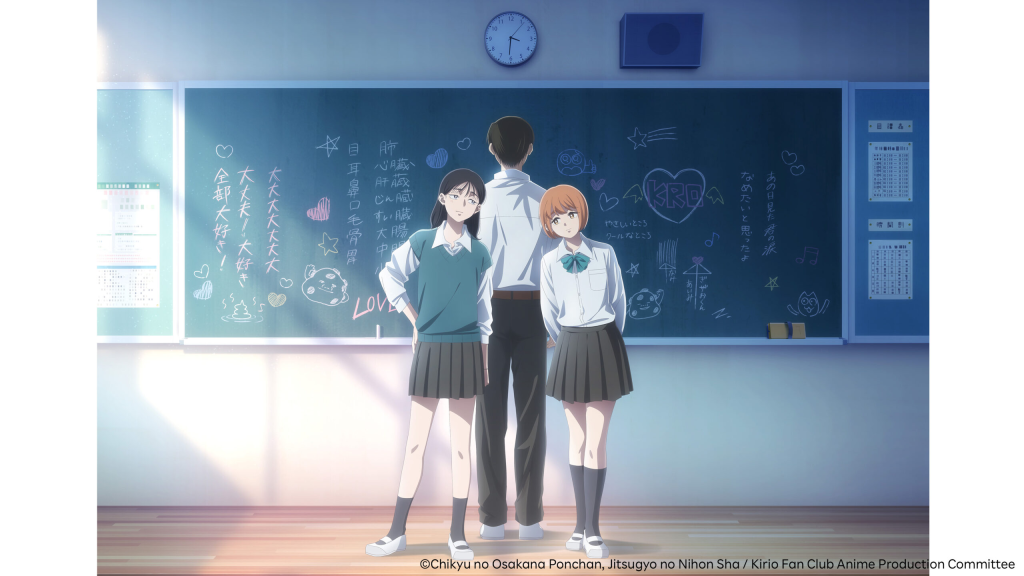
In Ponchan Chikyū no Osakana’s manga and anime, Kirio Fan Club, the series centers on best friends Aimi Miyoshi and Nami Sometani, who form an intensely devoted—yet utterly unrequited—two-person fan group dedicated to their completely oblivious classmate, Ken Kirio.
Rather than actually interacting with Ken, Aimi and Nami’s “fandom” takes the form of wild imaginations, secretive rivalry, and constant overanalysis of every mundane detail in Ken’s daily life. They obsess over everything from his mediocre soccer skills to his average grades, turning the ordinary into the extraordinary through their passionate (and sometimes absurd) daydreams.
Their friendship is a whirlwind of secret pacts, escalating fantasies, and competitive one-upmanship, with each girl determined to prove she is Ken’s truest admirer—even if neither can muster the courage to actually speak to him. As the series progresses, their classmates become aware of the fan club’s antics, sometimes encouraging Aimi and Nami to take real action or egging on their rivalry for entertainment. This only amplifies the chaos and hilarity, as the fan club’s drama spirals further out of control.
Kirio Fan Club is a brilliantly self-aware and affectionate parody of fan culture, shining a light on the awkwardness, intensity, and humor of adolescent crushes and over-the-top devotion.
By focusing on the dynamic between Aimi and Nami, the series explores how “fandom” can be as much about friendship and rivalry as it is about the actual object of affection—making the Kirio Fan Club one of anime and manga’s most relatable (and entertaining) takes on the fan club trope.
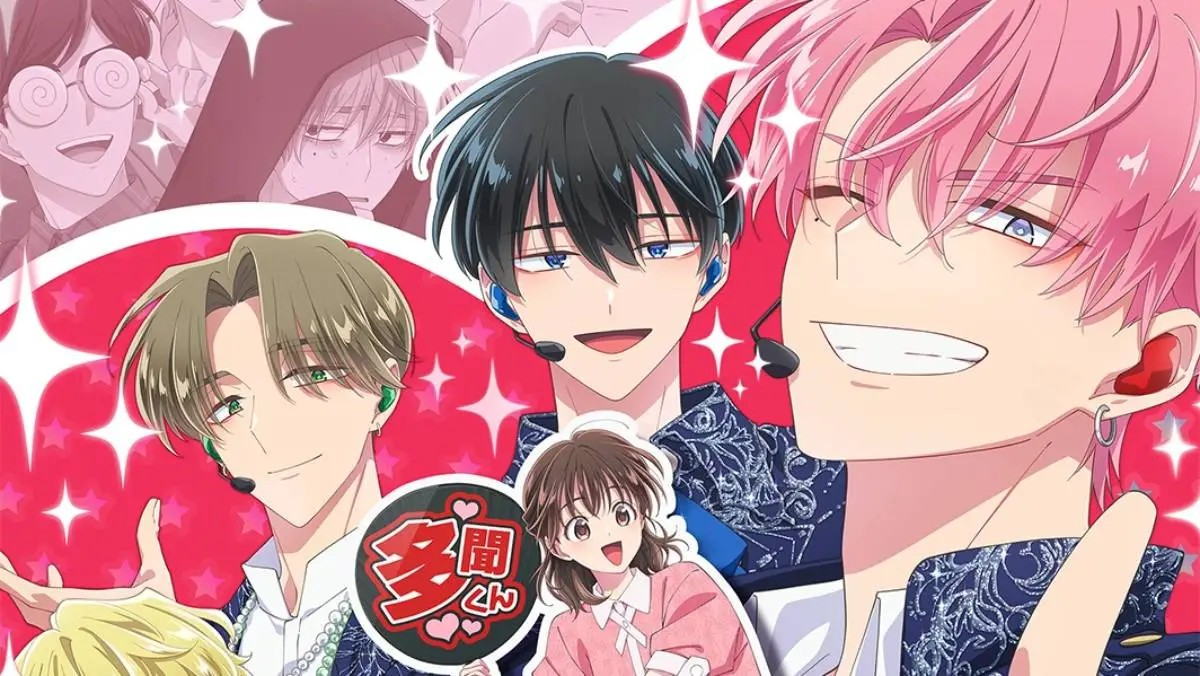
1) Tamon’s B-Side (Tamon’s B-Side)
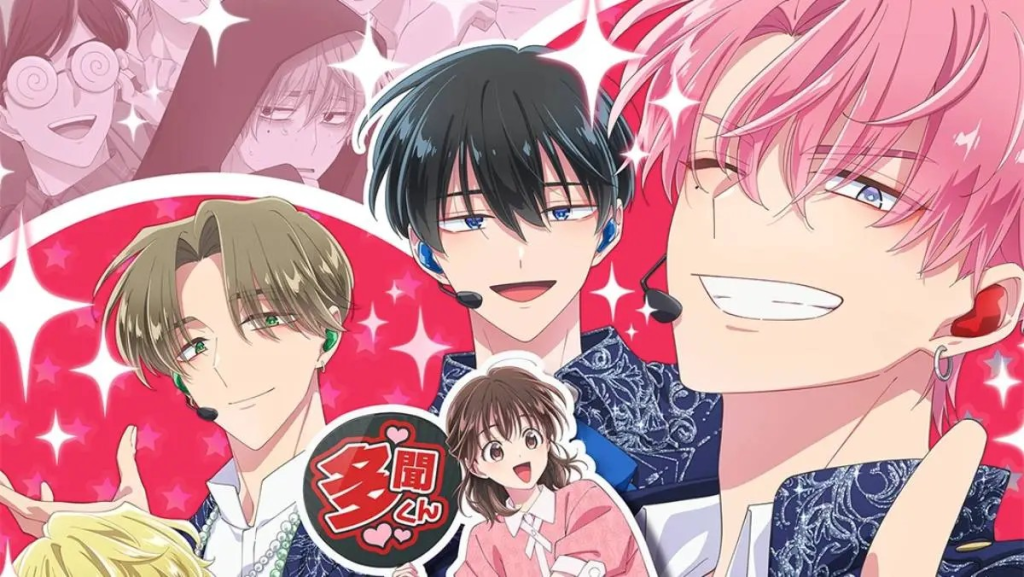
Taking the number one spot is Tamon’s B-Side by Yuki Shiwasu—a heartfelt and authentic story about what it truly means to support your idol.
Meet Utage Kinoshita: She’s the ultimate fan, working a part-time cleaning job just to afford merchandise and concert tickets for her favorite idol, Tamon
Fukuhara, a member of the boy band F/ACE. Utage’s dedication goes above and beyond typical fandom, but her world is turned upside down when she unexpectedly becomes Tamon’s housekeeper.
Off the stage, Tamon is nothing like his confident public persona—he struggles with insecurity and self-doubt, weighed down by the intense pressures of the idol industry. Rather than remaining a distant admirer, Utage becomes a real source of support in Tamon’s private life. She encourages him, protects his secret, and helps him find the strength to keep performing for his fans. Utage’s journey from super-fan to trusted confidante is touching, and her care for Tamon beautifully illustrates the power of sincere support and understanding.
The series also features the other members of F/ACE: Ouri Sakaguchi, the elegant but prideful prince; Keito Tachibana, the hardworking leader with a strong sense of responsibility; Natsuki Ishibashi, the multi-talented and fashionable “cute” member with a complicated past; and Rintarō Kai, the cool rapper who’s secretly an anime otaku. Each member has their own challenges and hidden sides, bringing depth and realism to the world of F/ACE.
Tamon’s B-Side captures the heart of modern idol culture, from the pressures and anxieties idols face behind closed doors to the unwavering devotion of their fans.
Utage’s role evolves from fangirl to someone truly important in Tamon’s life, making this series a moving exploration of support, identity, and what it means to truly see and care for someone—onstage and off.







Leave a Comment