Most “greatest anime manipulators” lists are really just “greatest anime villains” lists wearing a trench coat. Rewatch a lot of them and it starts to bother you, because manipulation and villainy aren’t the same skill. A villain can win with an army. A manipulator wins with a sentence. The entire threat of a manipulator character is that they never have to raise their voice, and by the time you realize what happened, the story has already moved past the moment where you could’ve stopped it.
So instead of ranking these ten by “how evil” or “how iconic,” this list ranks them by manipulation mechanics — the actual lever each character pulls to control other people. That’s the part most rankings skip, and it’s the part that actually explains why some of these characters live in your head rent-free years after you finished the show.
The Three Levers of Fictional Manipulation
Before the ranking, it helps to have a framework, because “manipulator” is doing a lot of work as a category. Pull apart the ten characters on this list and pretty much every one of them is operating on at least one of three levers:
- Information asymmetry — they know something the other person doesn’t (a hidden identity, a hidden plan, a hidden motive), and the entire manipulation collapses the moment that gap closes.
- Emotional leverage — they’ve found what someone needs (belonging, validation, purpose, love) and they control the supply of it.
- Narrative control — they’re not manipulating a person so much as manipulating the story everyone believes they’re in, so that people manipulate themselves on the character’s behalf.
Keep those three levers in mind. They’re the difference between a character who tricks people and a character who rewires them and that distinction is exactly what separates the bottom half of this list from the top three.
Note: If you’ve ever wondered why certain anime character types keep resurfacing across totally different shows, this is really the same instinct at work, the same reason tropes and archetypes like the tsundere or the yandere get named and repeated in the first place: audiences respond to a recognizable pattern, whether it’s a personality trope or a manipulation tactic.
11. Eren Yeager — Attack on Titan

Lever: narrative control, deployed backward through time.
Eren’s manipulation is unique on this list because it isn’t really aimed at the people around him in the present — it’s aimed at the entire causal chain of the story. Using the Attack Titan’s ability to transmit memories into the past, he manipulates his own father, Grisha, into a course of action that guarantees Eren’s own future exists exactly as he needs it to. It’s manipulation with a closed loop: Eren is both the manipulator and the reason the manipulation was necessary in the first place.
What makes this land harder on a rewatch is that Eren spends most of the story looking like the target of manipulation — a kid pushed around by forces bigger than him. The reveal that he was steering the loop the entire time retroactively turns nearly every “he had no choice” moment in the earlier seasons into something far colder.
10. Yuuichi Katagiri — Tomodachi Game

Lever: information asymmetry, hidden behind performed loyalty.
Katagiri’s whole design rests on a simple, uncomfortable idea: the “good friend” archetype is the least suspected position in any group, which makes it the most useful one to occupy if you actually want to run the group. He doesn’t manipulate through charisma or threats — he manipulates by mapping each friend’s specific pressure point (debt, ego, guilt, greed) and applying exactly enough pressure to move them, while keeping his own read on the situation invisible.
The show is honest about the cost of this: Katagiri isn’t a mastermind floating above consequence. He’s a survival strategist, and the series repeatedly shows that his tactics were forged by necessity, not sadism — which makes him a manipulator worth studying rather than just rooting against.
9. Shogo Makishima — Psycho-Pass

Lever: emotional leverage, aimed at ideology instead of individuals.
Makishima doesn’t manipulate one person at a time — he manipulates belief systems. His entire philosophy is that a society optimized for measurable, quantified “mental health” has produced people who’ve never been allowed to feel the full range of being human, and he treats that repression as a door he can walk through. He finds people already primed to break and gives them a philosophical permission slip to do it.
What separates him from a generic anarchist villain is that he isn’t lying to anyone. He genuinely believes what he’s selling, which is what makes him so effective — audiences (and characters) can smell insincerity, but Makishima isn’t performing conviction. He has it.
8. Griffith — Berserk

Lever: narrative control through weaponized charisma and hunger for power.
Griffith’s manipulation works because he never has to ask anyone to believe in him — he simply becomes the kind of person other people can’t help projecting their own dream onto. The Band of the Falcon doesn’t follow a plan; they follow a feeling, and Griffith understands exactly how to keep that feeling alive without ever fully explaining what it’s in service of.
The Eclipse is the endpoint of that mechanic, not a departure from it: the people who trusted him most are the exact people whose devotion made them useful as a sacrifice. It’s the darkest possible answer to the question “what happens when someone treats loyalty as a resource instead of a relationship.”
7. Makima — Chainsaw Man

Lever: emotional leverage through engineered dependency.
Makima’s method is the most psychologically specific one on this list, and it’s worth naming plainly: she identifies someone starved of stability and affection, supplies just enough of both to make herself indispensable, and structures the relationship so that any independence the other person develops reads to them as a threat to what little security they have. It’s not really about control for its own sake — it’s about making sure nothing and no one else can offer that person what she offers.
This is why Denji’s arc with her is so unsettling to watch. It isn’t manipulation via lies. It’s manipulation via accurate diagnosis — she correctly identifies what he needs and rations it.
6. Kiyotaka Ayanokoji — Classroom of the Elite
 Lever: information asymmetry, maintained through deliberate invisibility.
Ayanokoji’s core trick is one most manipulator characters never bother with: staying unremarkable on purpose. He calibrates his test scores, his social presence, and his conflicts specifically to sit below the threshold where anyone would think to study him. Every other manipulator on this list eventually becomes the center of attention because manipulation at scale usually requires visibility. Ayanokoji’s entire thesis is that visibility is the first mistake.
That’s also why he reads less like a character with goals and more like an experiment with legs — his manipulation isn’t really in service of ambition. It’s in service of watching what people do when they think no one capable is watching.
5. Kenjaku — Jujutsu Kaisen

Lever: information asymmetry, weaponized through identity itself.
Every other manipulator on this list has to earn trust before exploiting it. Kenjaku skips that step by simply becoming the trusted person — a centuries-old brain that transplants itself into new bodies whenever the old one stops being useful, which means every relationship it’s ever had was really a relationship with a mask. The people around them aren’t lied to in the usual sense; they’re talking to someone who doesn’t exist the way they think.
It’s also why the endgame of this arc is worth keeping an eye on, especially with Jujutsu Kaisen Season 4 officially confirmed and the Culling Game far from over.
That’s what separates Kenjaku from a standard long-game schemer: the manipulation isn’t aimed at one character, it’s aimed at the shape of an entire society across generations, with human bodies treated as interchangeable vessels along the way. The Geto body-swap is the reveal that does the real damage — it retroactively turns years of “found family” moments into something closer to a very long con.
4. Lelouch Lamperouge — Code Geass
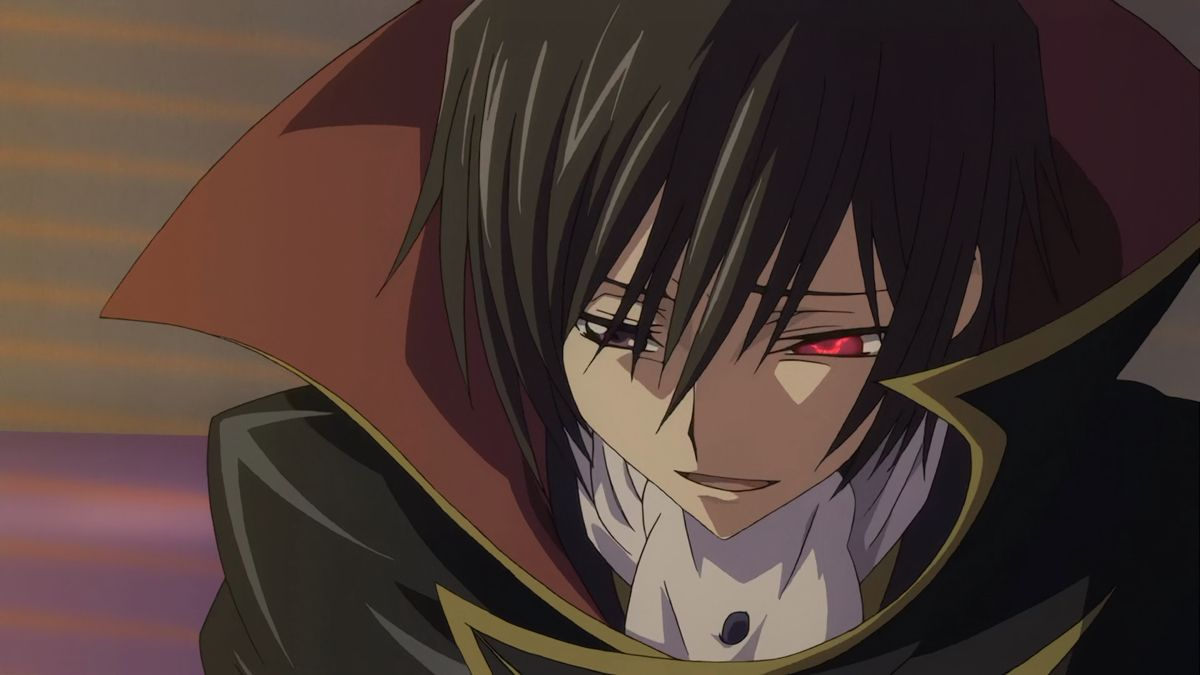 Lever: narrative control, cashed in as a final act of self-sacrifice.
Lelouch spends most of Code Geass using his Geass — a power that forces a single absolute command — as a shortcut past manipulation rather than an example of it. The real manipulation is the Zero Requiem: Lelouch spends his final arc engineering the entire world’s hatred to converge on himself specifically, so that his death can function as the shared enemy every warring faction needed in order to stop fighting each other.
It’s manipulation aimed at an entire planet’s grief and rage, executed with the full knowledge that it ends in his own death — which is what pushes Lelouch from “chessmaster” into something closer to a tragic architect.
3. Light Yagami — Death Note
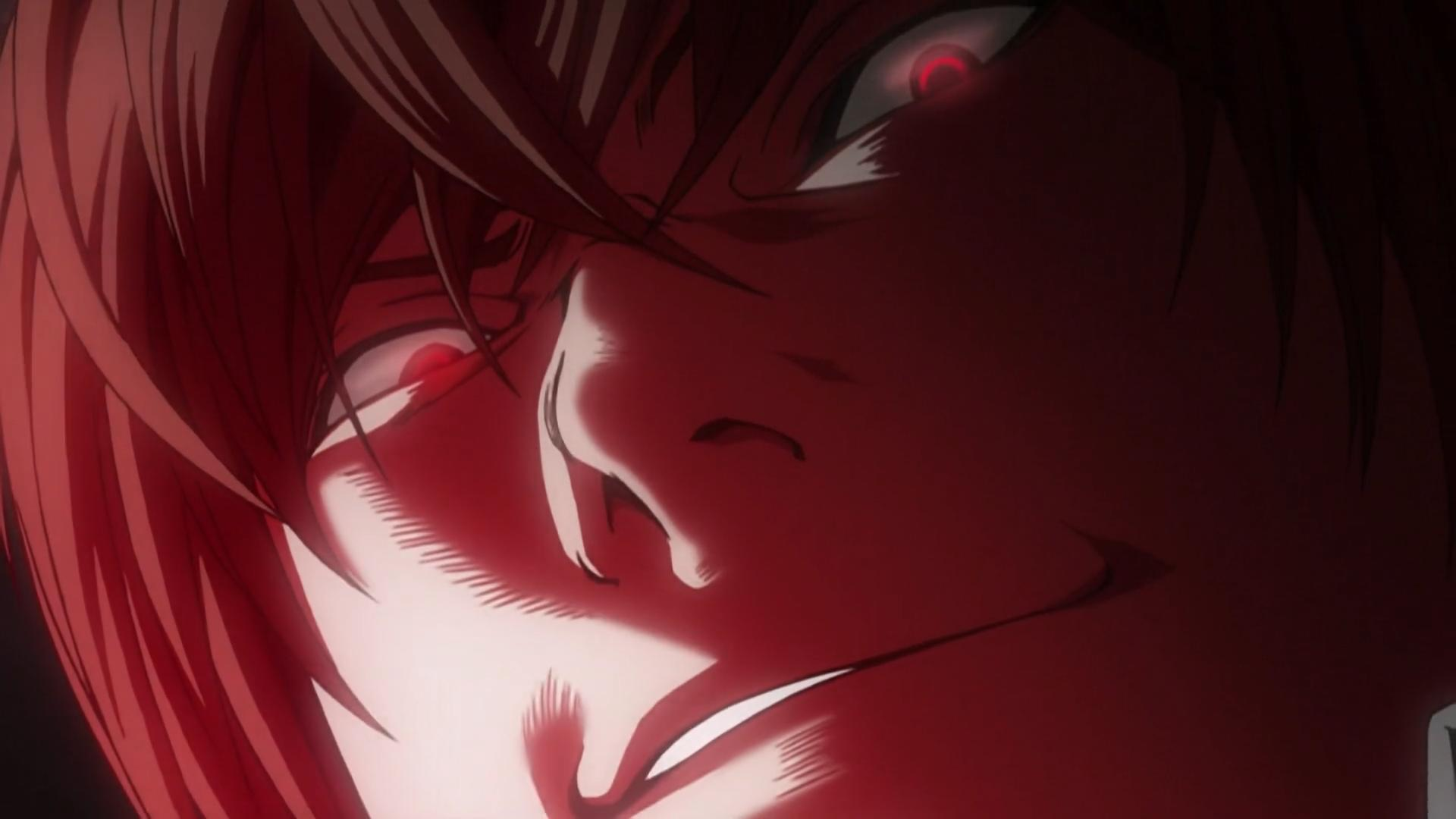 Lever: narrative control over the concept of justice itself.
Light’s manipulation isn’t really about individuals — it’s about getting an entire global population to redefine what “justice” means in real time, while he stays hidden inside the exact institution built to catch him. His cat-and-mouse dynamic with L works because both of them understand that the real battlefield isn’t physical evidence, it’s belief: whoever controls what the public thinks “Kira” represents wins, regardless of who’s actually right.
The choice to have himself stripped of his own memories mid-story is the cleanest example of his method: Light is willing to manipulate his own mind as a resource, as long as he’s confident about how and when the manipulation will be undone.
2. Sosuke Aizen — Bleach

Lever: narrative control over a timescale no other character on this list matches.
Aizen’s manipulation isn’t measured in scenes or arcs — it’s measured in decades. He orchestrates events around Ichigo’s development from before Ichigo is even born, fakes his own death using a hypnosis-based ability that lets him manipulate perception at the sensory level, and spends a century running quiet experiments while everyone around him, including his own allies, has no idea they’re inside his timeline.
What makes Aizen land as more than a smug meme (“everything is going according to plan”) is that the show actually earns the reveal — his patience is the manipulation. He wins fights before they start because he was never playing the fight everyone else thought they were in.
1. Johan Liebert — Monster

Lever: pure emotional leverage, with no narrative trick or hidden power to hide behind.
Johan has no Geass, no titan power, no hypnosis. He has conversation. That’s what makes him the correct pick for the top of this list, and the reason his name still gets brought up in “scariest anime character” discussions more than two decades after Monster aired: Johan’s method is to sit with someone, locate the exact wound they’re least willing to look at, and speak to it directly until the person’s own psyche does the rest of the work for him.
He’s terrifying specifically because he requires no supernatural explanation. Every other name on this list gets to lean on a power system, a hidden identity, or a decades-long plan. Johan’s power is that people are, in fact, this reachable — and the show never lets you forget that the scariest manipulation in anime doesn’t need magic to work.

9 Iconic Anime & Manga Fan Clubs That Stole the Spotlight
From Fruits Basket to Maid Sama, explore 9 unforgettable fan clubs in anime and manga — devoted, chaotic, and sometimes downright toxic.

My Top 5 Webtoons That Deserve an Anime Adaptation
From Subzero to The Remarried Empress, these my 5 favourite webtoons have the art, story, and fanbase to become your next favorite anime plus the studios that should adapt them.

Top 10 Anime Characters Who Would Be Great Food Critics
Some anime characters know good food when they taste it. From master chefs to passionate food lovers, here are 10 anime characters who would make excellent food critics.
Top 10 Anime Side Characters That Need Their Own Sequel
Some anime side characters leave a bigger impression than the protagonists. Here are 10 characters who deserve their own spin-off, prequel, or side story.

Summer 2026 Anime: 10 Most Anticipated Shows That Are Going to Break You This Season
Explore the most anticipated Summer 2026 anime. From Bleach’s finale to new originals, here are 10 must-watch shows you can’t miss this season.

15 Most Underrated Romance Anime of All Time
Romance anime deeper than your watchlist goes. 15 underrated picks — TV series and films — with MAL scores, vibes, and why each one actually matters.