

Anime romance isn’t always about perfect endings or dramatic confessions. The love stories that stay with us are often quieter — built through loss, patience, regret, and choice rather than destiny alone.
I have tried to curate a list of some iconic couples who loved through trauma, distance, curses, and time itself. Some found happiness, some paid painful prices, and some understood love only after it was almost gone. What unites them is not perfection, but emotional honesty.
Spoiler Warning: “This article discusses major character arcs and endings across multiple anime series.”
If you’re ready to revisit relationships that felt deeply human — messy, tender, and unforgettable — these anime couples might just make you believe in love again.
20. Loid & Yor Forger (Spy x Family)
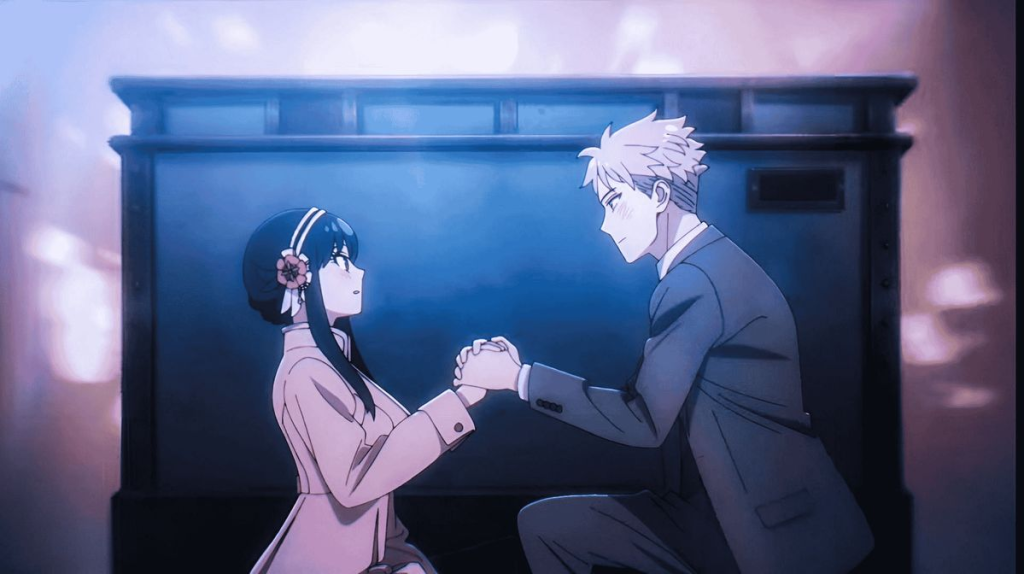
Loid and Yor’s relationship begins as a lie, but grows through accidental sincerity.
Loid needs a wife for a mission. Yor needs a husband for cover. But in their shared domestic life, cracks begin to form in their professional masks. Yor expresses love through acts of service — desperately trying to be a good mother to Anya, learning to cook despite constant failure, and worrying about being useful enough to stay.
Loid, trained to suppress emotion, finds himself smiling without realizing it. With Yor, his reactions are not rehearsed. Both fear being replaced — a deeply human insecurity in a household built on secrets.
What makes their bond feel real is that neither is pretending inside the home. Love arrives not as confession, but as relief in being needed.
19. Gabimaru & Yui (Hell's Paradise)

Gabimaru and Yui’s relationship is built on softness saving brutality.
Gabimaru believes he is hollow — an assassin without emotion. Yui, the village chief’s daughter, proves him wrong simply by loving him without conditions. Their bond reflects the balance of Tao — Yin and Yang: Yui’s gentleness becomes the strength that allows Gabimaru to endure violence without losing himself.
She gives him a reason to survive not for glory or escape, but for home. Even in her absence, Yui remains his emotional anchor, pulling him forward through Shinsenkyo’s horrors.
Their love proves that emptiness is not permanent — sometimes it only waits for someone willing to fill it with warmth.
18. Yuki & Itsuomi (A Sign Of Affection)
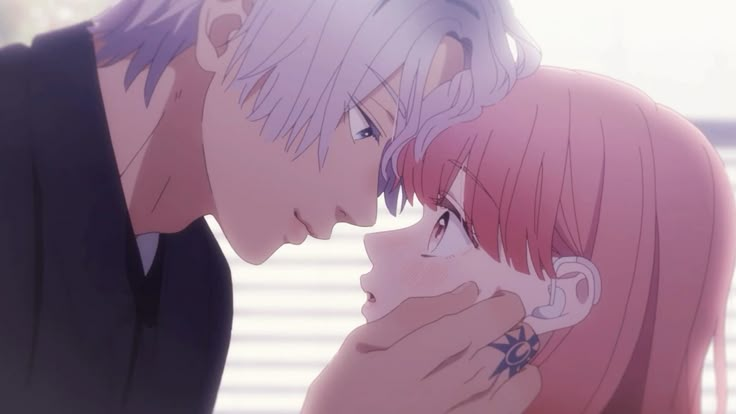
Yuki and Itsuomi’s relationship is built on intentional understanding, not grand gestures.
Yuki navigates the world quietly as a deaf university student, while Itsuomi moves through life loudly, speaking multiple languages and chasing experiences across countries. What brings them together is not contrast, but curiosity. Itsuomi does not treat Yuki’s deafness as a limitation — instead, he steps into her world by learning sign language, not as a tool, but as a commitment.
He introduces her to new experiences gently, guiding her through emotional and social “firsts” without rushing her growth. What makes their bond feel real is that Itsuomi doesn’t just accommodate Yuki — he wants to understand how she experiences the world.
Their love is quiet, attentive, and deeply respectful, proving that real intimacy begins when someone chooses to meet you where you are, not where it’s convenient.
17. Hiro & Zero Two (Darling in the Franxx)
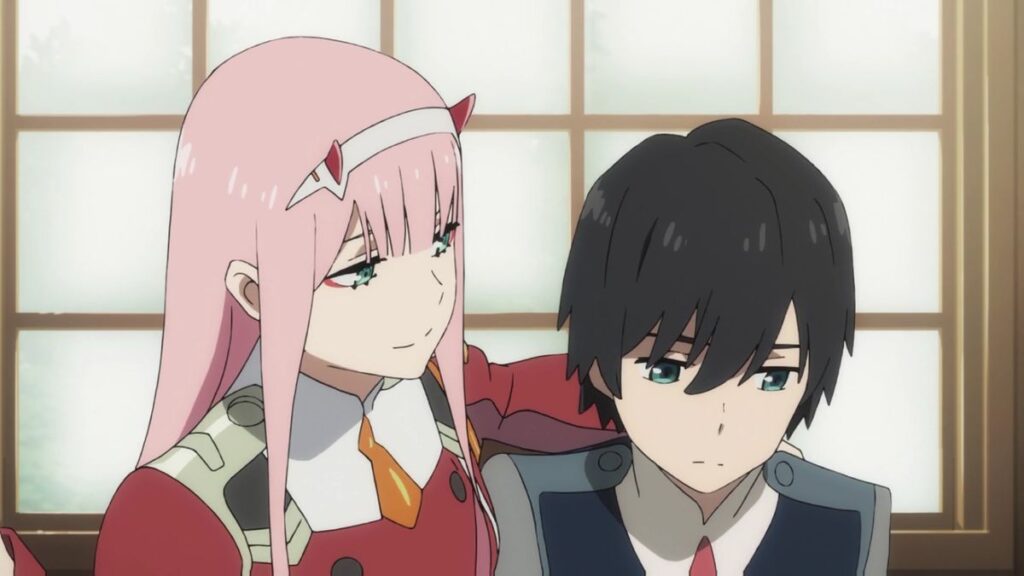
Hiro and Zero Two’s relationship is driven by mutual incompleteness.
Zero Two’s desire to become human is not philosophical — it is deeply personal. As a child, Hiro was the only one who treated her with kindness, giving her a name and calling her his “darling.” That memory becomes the core of her identity. Everything she does afterward is an attempt to return to that moment of recognition.
Hiro, on the other hand, is defined by failure. Unable to pilot, unable to meet expectations, he sees himself as disposable. Zero Two’s fixation gives him something he has never had: absolute selection. She chooses him without hesitation, and that choice becomes his reason to exist.
What makes their love feel real is not health or balance, but emotional intensity. This is first love in its rawest form — consuming, destabilizing, and transformative. It shows how love can humanize someone while simultaneously threatening to erase them.
16. Misaki & Takumi (Maid Sama!)

Misaki and Usui’s relationship thrives on pressure slowly giving way to trust.
Misaki builds walls early — strength, authority, and control are how she survives. When Usui discovers her secret job at a maid café, he holds the power to destroy her carefully constructed image. Instead, he becomes her silent protector, guarding her secret without demanding anything in return.
Usui’s persistence isn’t about conquest — it’s patience. He waits as Misaki pushes him away, denies her feelings, and hides behind her tsundere exterior. Over time, she realizes that his presence doesn’t weaken her; it steadies her.
What makes their bond feel real is Misaki’s gradual surrender — not to romance, but to allowing herself to be chosen without fear.
15. Kaguya & Miyuki (Kaguya-sama: Love Is War)
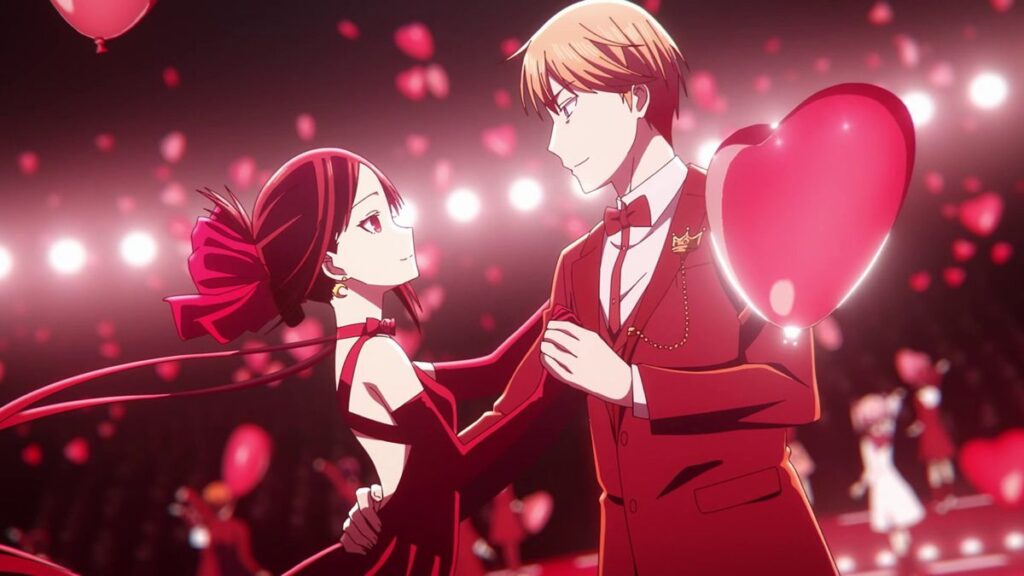
Kaguya and Miyuki’s romance is a battlefield of fear disguised as intellect.
Both are geniuses conditioned to believe vulnerability equals loss. Every interaction becomes a strategic maneuver — movie invitations feel like psychological warfare, and confessions are treated as defeat. Their “war” isn’t about pride alone; it’s about terror of rejection.
As the series progresses, the games crumble. Moments like Miyuki’s stargazing and their cultural festival kiss strip away strategy, revealing insecurity beneath brilliance.
What makes their bond feel real is that love doesn’t arrive through victory — it arrives when they finally allow themselves to be seen as imperfect.
14. Frieren & Himmel (Frieren)
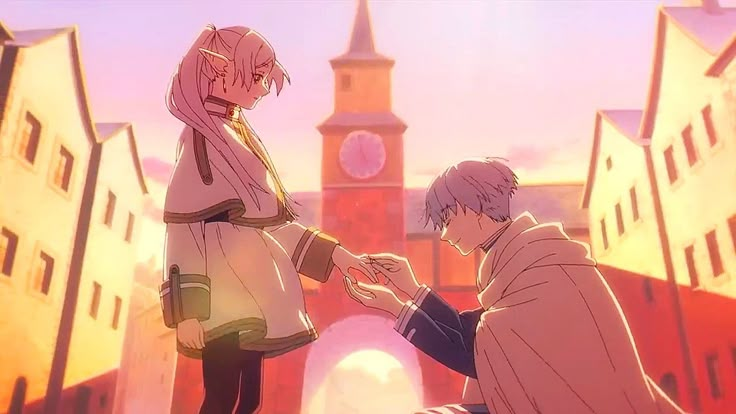
Frieren and Himmel’s relationship is not framed as a romance while it is happening — and that is precisely what makes it devastating.
Himmel expresses affection through quiet, deliberate gestures rather than overt declarations. He holds Frieren’s hand when she feels isolated, compliments her openly, and chooses to stay close even when he knows she may never reciprocate in the same way. These actions are not impulsive; they are learned behaviors, shaped by Himmel’s understanding of emotional presence and human fragility.
Frieren, bound by an elf’s perception of time, initially interprets Himmel’s behavior as superficial or even narcissistic. His words feel excessive to her, his warmth unnecessary. What she doesn’t realize is that she is experiencing love without emotional literacy — feeling comfort without understanding its source.
It is only after Himmel’s death that the truth settles in. Frieren begins to revisit moments she once dismissed and recognizes them as acts of care. Her journey becomes defined by retrospective regret, by the painful understanding that human life is fleeting, and by the realization that emotional connections do not wait for clarity.
What makes this bond feel real is not fulfillment, but missed recognition. It reflects a deeply human truth: sometimes we understand love only after it has already passed us by.
13. Usagi & Mamoru (Sailor Moon)
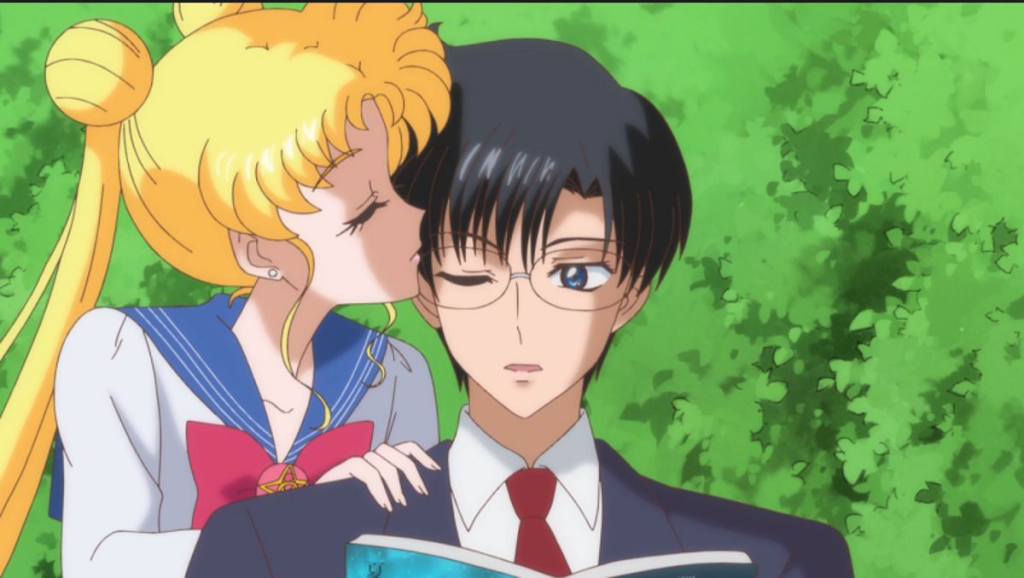
Usagi and Mamoru are bound by cosmic destiny, but their chemistry is forged through friction. As reincarnations of ancient royalty, their souls are meant to reunite across lifetimes, yet their early interactions are defined by teasing, bickering, and emotional distance. What makes their relationship feel real isn’t fate—it’s persistence. Despite constant arguments, they repeatedly put themselves in danger to protect one another long before fully understanding their shared past. Their love grows from irritation into trust, proving that even a relationship written in the stars still needs choice, effort, and emotional growth to survive.
12. Ban & Elaine (7 deadly Sins)
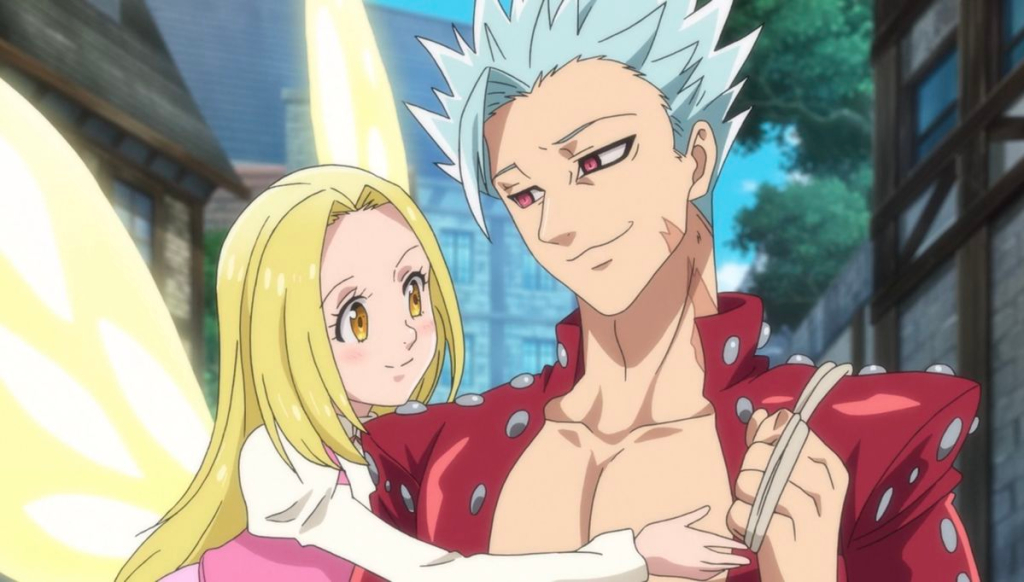
Ban and Elaine’s relationship does not begin with love — it begins with loneliness recognizing loneliness.
Ban arrives at the Fairy King’s Forest driven by pure self-preservation, seeking the Fountain of Youth because survival is the only instinct he trusts. Elaine, tasked with guarding the spring, has lived in isolation for centuries, her duty leaving no room for companionship. Their bond forms not through romance, but through shared stillness — awkward conversations, small acts of care, and the quiet relief of not being alone anymore.
Elaine is the first person to see Ban as more than a criminal or survivor. Ban, in turn, learns restraint for the first time — choosing to stay rather than take what he came for. When Elaine dies protecting him, Ban does not move on. He carries her absence for centuries, refusing to dilute what they shared.
What makes their love feel real is Ban’s final choice: surrendering the immortality he once valued above all else to give Elaine life. Love here is not poetic. It is irreversible sacrifice, made without expectation of reward.
11. Kyo & Tohru (Fruits Basket)
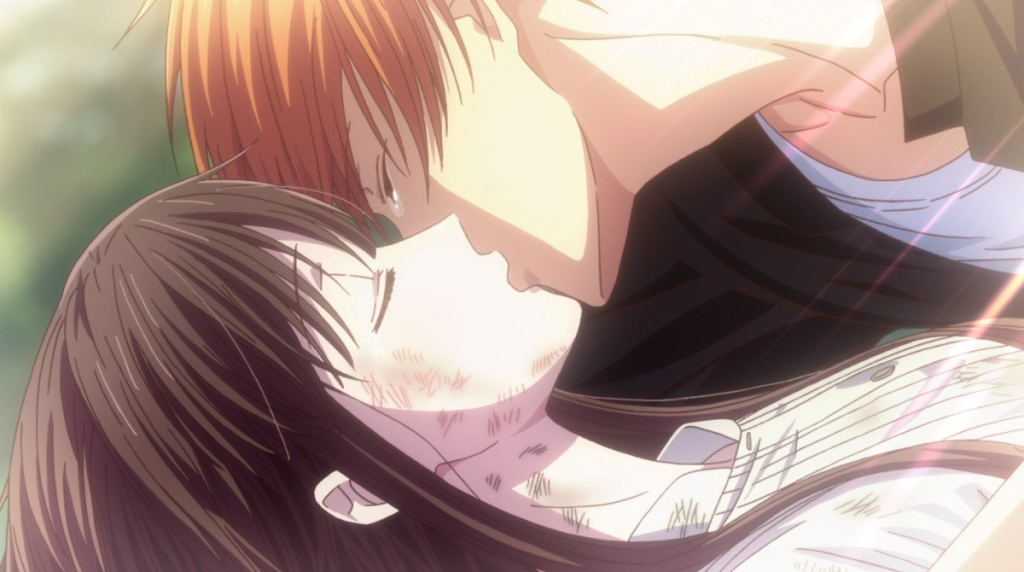
Kyo and Tohru’s relationship is not about romance first — it is about two grieving people learning how to exist without hating themselves. Kyo grows up believing he is destined to be abandoned, while Tohru survives by erasing her own needs for the sake of others. Their bond forms slowly, through shared vulnerability rather than attraction, rooted in mutual brokenness.
What makes their love feel real is how they face each other’s ugliness. When Tohru witnesses Kyo’s monstrous true form, she doesn’t pretend to be fearless. She admits she is terrified — and stays anyway, choosing to share both his pain and his warmth. Acceptance here is not blind optimism, but presence despite fear.
Crucially, this is not a one-sided healing story. Kyo is the first person to see through Tohru’s selfless mask, urging her to speak up, to want something for herself, to stop disappearing to keep others comfortable. At the same time, Tohru struggles with guilt, fearing that loving Kyo might diminish the memory of her late mother — as if happiness requires permission.
Their ending feels earned because it is chosen repeatedly, not granted. Growing old together, hand in hand, becomes proof that even a century-old curse is powerless against being fully seen — and still loved.
10. Yusuke & Keiko (Yu Yu Hakusho)

Yusuke and Keiko serve as a grounded emotional anchor in a world of demons and spirit battles. Keiko is blunt, practical, and unafraid to physically or emotionally knock sense into Yusuke when needed. Their bond, rooted in childhood familiarity, survives the impossible—including Yusuke literally dying and returning as a ghost. What makes their relationship feel real is Keiko’s consistency; she supports Yusuke not because she understands his world, but because she refuses to abandon him as he grows into responsibility.
09. Kenshin & Kaoru (Rurouni Kenshin)

Kenshin and Kaoru’s relationship is rooted in redemption through acceptance.
Kenshin lives burdened by the blood on his hands, believing peace is something he no longer deserves. Kaoru never denies his past — she simply refuses to let it define him. Her dojo becomes a space where killing is replaced with restraint, and survival is replaced with belonging.
Unlike Kenshin’s tragic past with Tomoe, his bond with Kaoru represents hope without sacrifice. When he finally proposes, it is not a grand gesture — it is a declaration that he chooses life over atonement.
Their love proves that redemption doesn’t come from punishment, but from being allowed to move forward.
08. Eren & Mikasa (Attack On Titan)
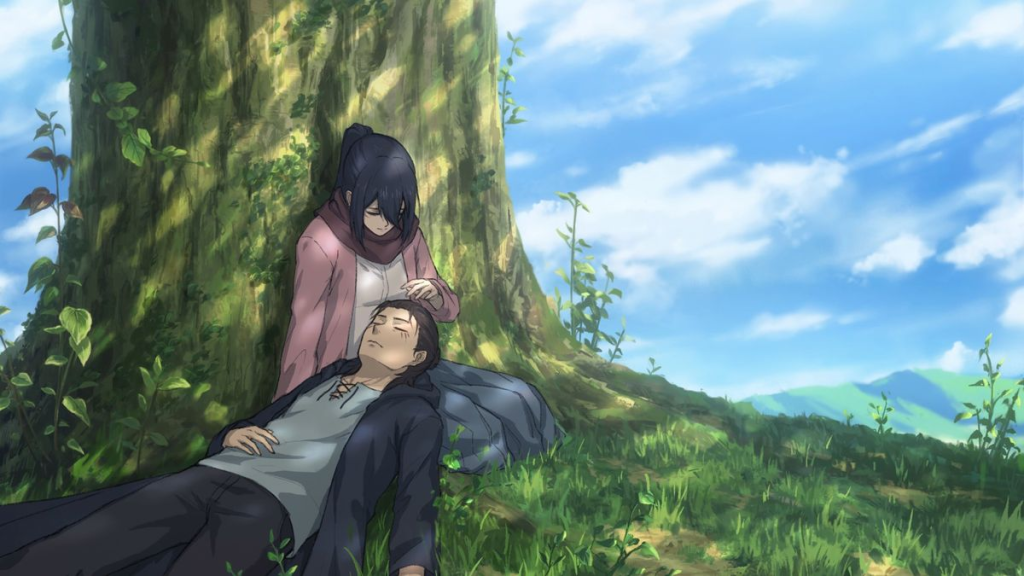
Eren and Mikasa’s bond begins not with romance, but with survival turning into dependency.
When Eren saves Mikasa from traffickers and wraps the scarf around her, he gives her more than warmth — he gives her a reason to live and fight. In that moment, Eren becomes savior, family, and emotional anchor all at once. Mikasa’s devotion forms instantly, first as protection, later as something deeper and far heavier.
As Mikasa grows, her care evolves from sibling-like guardianship into quiet, absolute love. Eren, however, moves in the opposite direction. His obsession with freedom and knowledge pushes him toward isolation, secrecy, and ultimately villainy. He chooses a path that ensures Mikasa will suffer, believing that becoming the enemy is the only way to protect what remains of the world.
What makes their relationship feel devastatingly real is the final imbalance of choice. Mikasa is forced to choose between the man she loves and the world he is destroying. Their story proves that sometimes love doesn’t end with forever — sometimes it ends with a goodbye that hurts more than staying ever could.
07. Yuta & Rika (Jujutsu Kaisen 0)
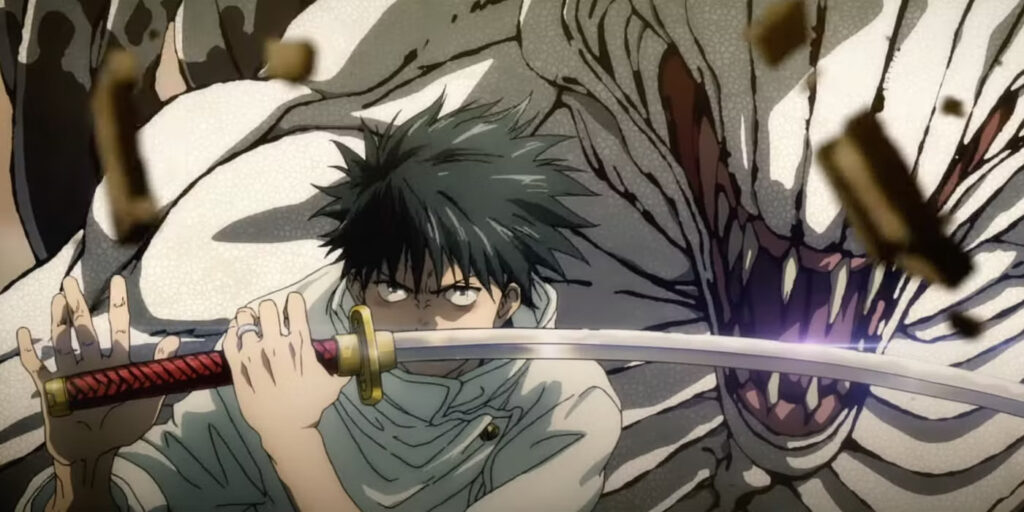
Yuta and Rika’s story begins as innocent childhood devotion and turns into tragedy through grief.
Their promise to marry is pure and unguarded. When Rika dies, Yuta’s inability to let go transforms love into a curse. Rika becomes a special-grade vengeful spirit, terrifying in power and driven by possessive protection.
What makes this relationship haunting is the realization that Yuta is not cursed by Rika — Rika is cursed by Yuta’s grief. Love becomes a chain rather than a comfort.
Their story finds redemption when Yuta finally understands that real love sometimes means letting go. By releasing Rika, he frees them both — proving that love is not possession, but the courage to say goodbye.
06. Akaza & Koyuki (Demon Slayer)
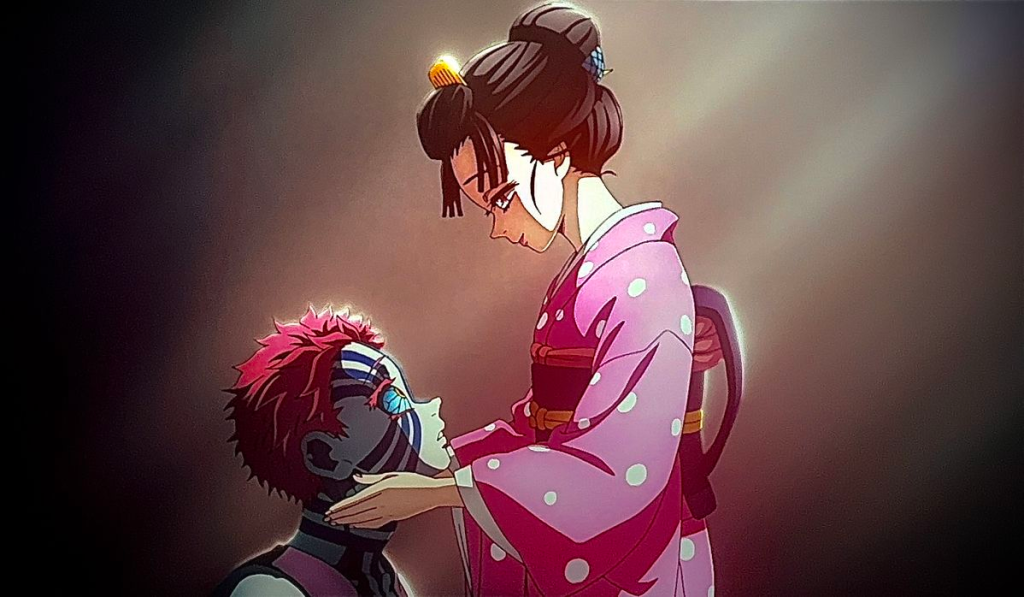
Akaza and Koyuki’s relationship exists as a tragic proof that love can outlive even erased humanity. Long before Akaza became Upper Moon Three, he was Hakuji — a boy who had lost everything until he was taken in by Keizo, a martial arts master who entrusted him with caring for his sickly daughter, Koyuki. Their bond grows quietly over three years, through small, domestic acts of devotion: changing her bedding, accompanying her through fragile days, and sharing time without expectation. When Koyuki confesses that meeting Hakuji made her want to live, love is framed not as passion, but as the restoration of hope.
Their proposal beneath the fireworks becomes one of the most painful “what-ifs” in the series. Hakuji vows to grow stronger not for ambition or pride, but for lifelong protection — a promise never fulfilled. When everything is taken from him, and he is reborn as a demon stripped of memory, what remains is not hatred, but echoes of love etched into instinct.
What makes their bond hauntingly real is how Koyuki continues to define Akaza subconsciously. His pink hair mirrors the color of her kimono. His snowflake-shaped Compass Needle reflects her hairpin. His firework-inspired techniques trace back to the night he dreamed of a future with her. Most tellingly, his refusal to eat or kill women for centuries stands as a silent apology, carried without conscious understanding.
Their reunion in the afterlife — when Koyuki tells him he has “done enough” — reveals the core truth of their story: even when memory fades and identity is corrupted, love leaves an imprint that suffering cannot erase. Akaza’s humanity never vanished; it waited, patiently, for the one person who first gave him a reason to believe in tomorrow.
05. Meliodas & Elizabeth (7 deadly Sins)
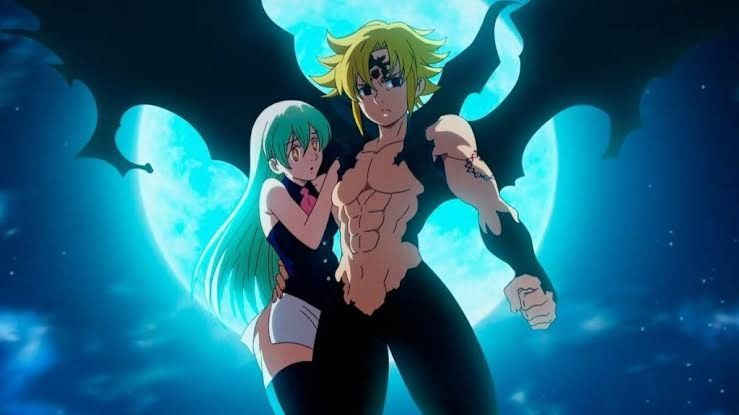
Meliodas and Elizabeth’s relationship is not defined by romance in the present — it is defined by memory carried across lifetimes.
Meliodas is cursed to live for over 3,000 years, fully conscious of every life Elizabeth has lived and every death she has suffered. Each reincarnation forces him to fall in love again, knowing with certainty how it will end. His affection is therefore restrained, almost guarded, not because it is weak, but because he has learned that loving too openly only deepens the loss that will follow.
Elizabeth, by contrast, experiences love without memory. She is drawn to Meliodas instinctively, repeating patterns of care, kindness, and emotional openness without understanding why they feel so natural. Her warmth is unburdened by history, while Meliodas’s devotion is weighed down by it. This imbalance creates a quiet tension: one loves freely, the other loves while bracing for inevitable grief.
What makes their bond feel real is not destiny, but emotional endurance. Meliodas continues to choose Elizabeth despite knowing the cost. He protects her not out of hope for a happy ending, but out of refusal to let suffering erase meaning. Elizabeth’s gradual awakening to the truth transforms their relationship from innocence into shared resolve.
Their love is not idealized. It is exhausting, cyclical, and shaped by trauma. And yet, they persist — not because love guarantees happiness, but because abandoning it would mean surrendering to despair. In that persistence lies the most human part of their story: choosing love even when it hurts every single time
04. Edward & Winry (Fullmetal Alchemist: Brotherhood)
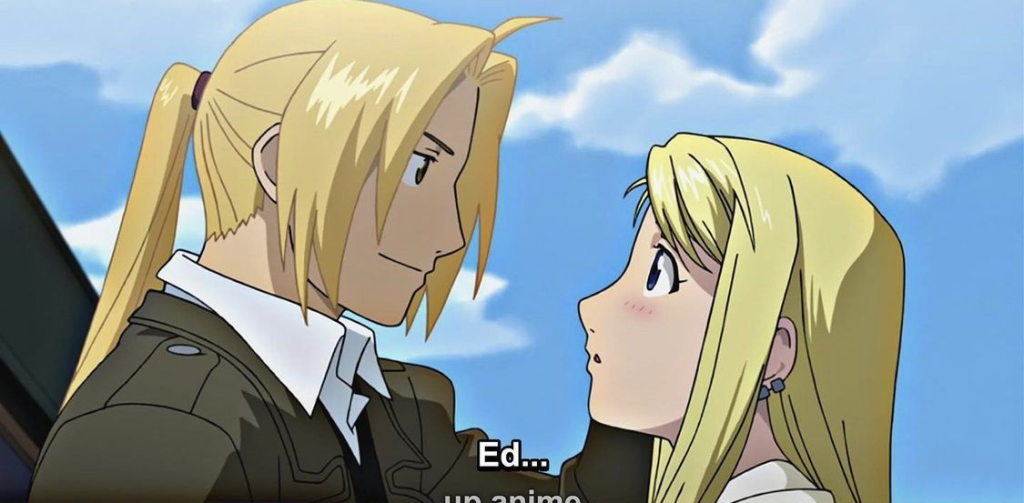
Edward and Winry’s bond is anchored in shared childhood trauma and mutual reliance. Winry is the only person who can truly “fix” Edward—literally as his automail mechanic and emotionally as someone who understands his guilt without excusing it. Their chemistry is loud and combative, filled with arguments and sharp words, yet Edward’s most vulnerable moments always unfold in Winry’s presence. Their final confession, framed through the principle of equivalent exchange, is uniquely authentic: instead of grand promises, they offer half of their lives to each other, imperfect but honest.
03. Inuyasha & Kagome (Inuyasha)
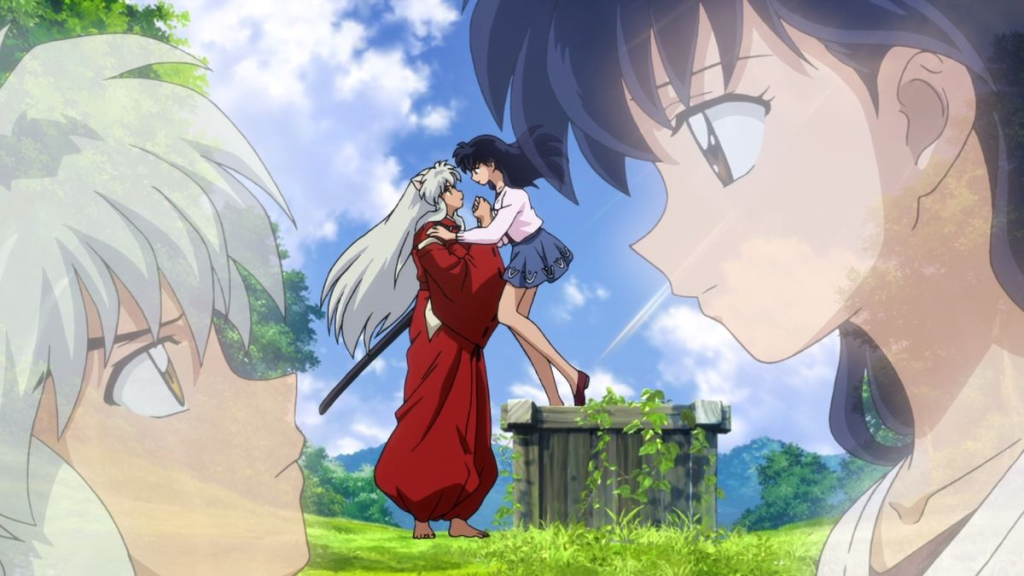
Inuyasha and Kagome’s relationship is shaped by emotional inheritance.
Inuyasha does not enter the relationship empty-handed — he carries Kikyo’s memory, guilt, and unresolved grief. Kagome is not unaware of this; she lives with it. What makes their bond real is that Kagome never demands to replace the past. She insists on the present.
Their conflicts are not misunderstandings, but collisions between insecurity and history. Inuyasha lashes out because he doesn’t know how to reconcile loving again without betraying what he lost. Kagome stays because she understands that love doesn’t erase what came before — it coexists with it.
Their chemistry is messy, loud, and often frustrating, but it evolves. Kagome slowly becomes the person who anchors Inuyasha to the now, not by denying his pain, but by refusing to let it define his future. Love, here, is not resolution — it is persistence.
02. Naruto & Hinata (Naruto Shippuden)
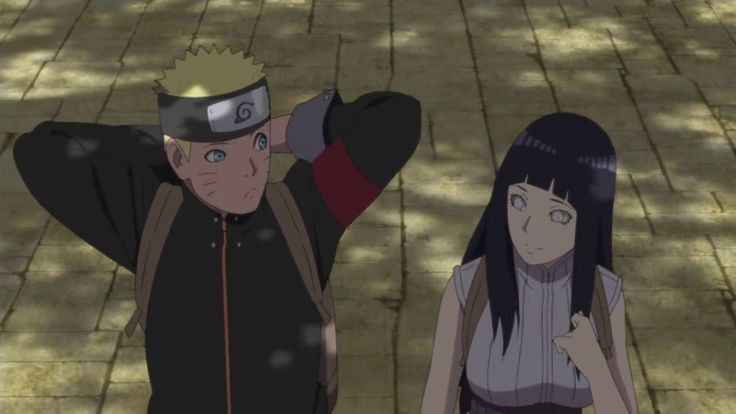
Hinata’s affection forms quietly, long before Naruto becomes a hero. She watches him fail publicly, endure ridicule, and stand back up without losing kindness. What draws her in is not his strength, but his refusal to disappear, even when the world treats him as unwanted. Her love grows without expectation of return, expressed through observation rather than action.
Naruto, meanwhile, lives in emotional survival mode. His need to be acknowledged consumes him so completely that he mistakes attention for connection. Hinata exists at the edges of his awareness, not because she is invisible, but because Naruto has not yet learned how to receive love without earning it. Emotional care feels foreign to someone who grew up without it.
When realization finally comes, it is not sudden or dramatic. It arrives through accumulation — moments of courage, quiet support, and Hinata standing beside him when belief wavers. Naruto understands that her presence sustained him in ways power never could. Love, for him, is not conquest; it is recognition and safety.
What makes their bond feel real is its uneven timing. Hinata arrives at love early; Naruto arrives only after emotional growth allows him to see what was always there. Their relationship reflects a deeply human truth: love is often not simultaneous — it waits until both people are capable of meeting it honestly.
01. Bulma & Vegeta (Dragon Ball Z)
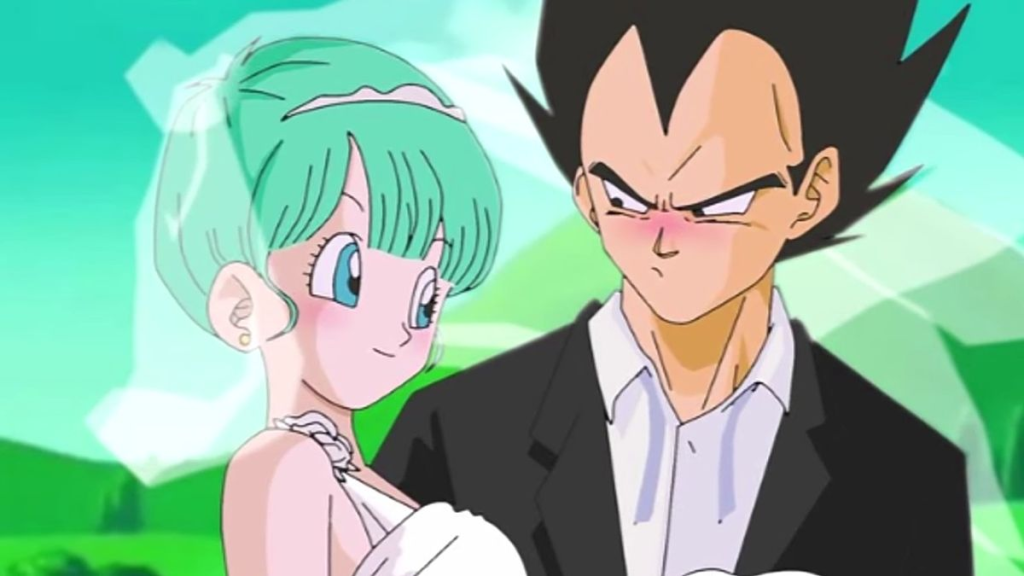
Vegeta and Bulma represent one of anime’s most organic enemies-to-lovers evolutions. Vegeta arrives on Earth as a pride-driven conqueror with no concept of domestic life or emotional vulnerability. Bulma, however, refuses to treat him like a myth or a monster. She openly mocks him, challenges his ego, and famously strips him of his warrior identity by washing his armor and forcing him into civilian clothes—including the humiliating pink shirt. What grounds their relationship is mutual challenge: Bulma never shrinks herself, and Vegeta gradually learns to value her strength. His eventual decision to prioritize Bulma’s pregnancy over his obsession with training marks a quiet but profound shift—from Saiyan pride to chosen responsibility.
Vegeta is actually a “Pookie” when it comes to “her Bulma” and ofcourse her daughter. For others, he will always be the “Prince”.
Related Articles:
- Top 10 Romance Anime You Can Finish in One Night
- 10 Romance Anime Where the Girl Confesses First
- 20 Best Romance Anime with Happy Endings – No Sad Goodbyes, Just Love
- 15 Best Anime of 2025 So Far (Worth Watching)
- 12 Best Anime Inspired By Japanese Mythology & Folklore
- The Most Awaited Anime of 2026 (So Far)
- 50 Most Underrated Anime — The Best Recs You’ll Ever Get!



Those are yours alright! . We at least need to get these people stealing images to start blogging! They probably just did a image search and grabbed them. They look good though!